Become a Qualified Artisan | Skilled Career Paths SA

Steel Buildings for Logistics and Distribution Centres
March 4, 2026

Why You Should Consider Becoming a Qualified Artisan

Choosing a career after school can feel like a big decision. Some learners are pushed towards university because it is seen as the “normal” route. But not every strong career starts with a degree. In South Africa, many young people are building successful futures through practical trade training, technical skills and artisan qualifications.

Becoming a qualified artisan is a powerful career option for learners who enjoy working with their hands, solving real problems and seeing the results of their work. Artisans are the people who keep industries moving. They repair, build, install, maintain, weld, service, test and improve the systems that homes, businesses, mines, factories, farms, workshops and transport companies depend on every day.

For the right learner, artisan training is not a second choice. It is a smart, practical and valuable career path.

What Is a Qualified Artisan?

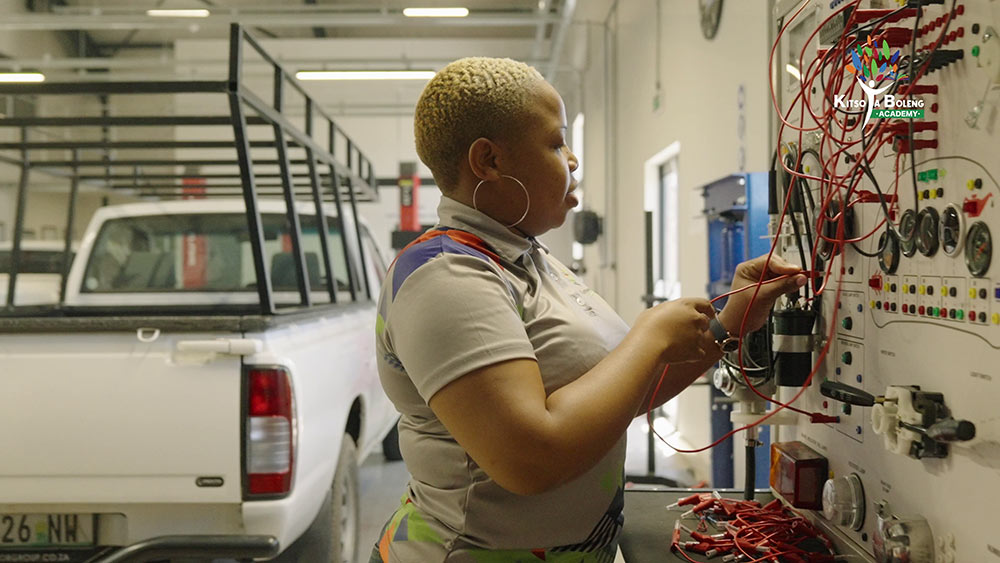
A qualified artisan is a trained tradesperson who has developed the knowledge, practical ability and workplace experience needed to perform a recognised trade. This can include trades such as welding, fitting and turning, electrical work, diesel mechanics, automotive mechanics, boilermaking, millwright work, mechanical fitting and many others.

Artisans are not only “hands-on workers”. They are problem-solvers. They read drawings, follow safety procedures, use specialised tools, understand technical systems and work according to industry standards. In many cases, they are the people called in when a machine stops working, a vehicle needs diagnosis, a structure must be fabricated, or an industrial system needs maintenance.

That makes artisan skills valuable in almost every part of the economy.

South Africa Needs Skilled Artisans

South Africa has a strong need for skilled technical workers. Industries such as mining, manufacturing, construction, engineering, transport, agriculture, energy, automotive services and infrastructure maintenance all depend on people with practical trade skills.

When factories need production equipment repaired, they need artisans. When trucks, tractors and heavy vehicles need servicing, they need diesel mechanics. When metal structures must be built or repaired, boilermakers and welders are needed. When electrical and mechanical systems work together, millwrights play an important role.

This demand creates real opportunities for learners who are willing to train properly and build their skills step by step. A trade can give you a clear career direction, especially if you do not want to follow a purely academic path after school.

A Practical Career for Practical People

Many learners learn better by doing. They want to work with tools, machines, engines, wiring, steel, equipment or technical systems. They may not enjoy sitting behind a desk every day, but they come alive in a workshop or practical training environment.

That is one of the biggest benefits of artisan training. It combines theory with hands-on learning. You do not only learn what something is. You learn how it works, how to fix it, how to maintain it and how to use the correct process safely.

This type of learning builds confidence. It also helps learners understand the real working world sooner, because they are exposed to workshop discipline, safety habits, tools, technical instructions and practical problem-solving.

Artisan Careers Can Offer Long-Term Growth

A trade does not have to stop at entry-level work. Many qualified artisans grow into senior roles over time. With experience, an artisan can move into supervision, workshop management, maintenance planning, quality control, production support, technical sales, field service, specialist repairs or even business ownership.

For example, a learner who starts in automotive training may later work in a dealership, fleet company, private workshop or transport business. A welder may grow into coded welding, fabrication, inspection support or specialised industrial work. A fitter and turner may move into precision machining, maintenance, plant repair or production engineering support.

The starting point is skills. Once those skills are built properly, the career path can grow in different directions.

Artisans Help Build the Country

Artisans do work that matters. They help keep water systems, vehicles, factories, farms, power equipment, buildings, workshops, production lines and transport systems running. Without skilled artisans, essential services and industries would slow down quickly.

This gives artisan careers a strong sense of purpose. You are not only working for a salary. You are contributing to the systems that people and businesses rely on every day.

For South Africa, more skilled artisans can mean better productivity, stronger local industries, improved maintenance, safer workplaces and more young people entering meaningful careers.

A Good Option for Learners Who Want to Earn Through Skill

One of the reasons artisan training is so attractive is that it is based on ability. Employers value people who can do the work correctly, safely and reliably. A learner who develops strong practical skills, good work habits and a professional attitude can become useful in many workplace settings.

Artisan training also teaches responsibility. Learners must arrive on time, work safely, follow instructions, look after tools, complete tasks properly and work as part of a team. These habits are important in any career, but they are especially important in technical environments where safety and quality matter.

For parents, this makes artisan training a strong option to consider. It gives young people structure, direction and a career path linked to real workplace needs.

Who Should Consider Artisan Training?

Artisan training may be a good fit for learners who:

  • Enjoy working with tools, machinery, vehicles or equipment
  • Like solving practical problems
  • Prefer hands-on learning over only classroom-based study
  • Are interested in technical subjects
  • Want a career with visible results
  • Are willing to learn safety, discipline and proper work habits
  • Want a skill that can be used in different industries

It is also a good path for learners who are not sure if university is right for them. Choosing a trade does not mean choosing a smaller future. It means choosing a practical future built on technical ability.

Build Your Future Through KYB Academy

If you are serious about becoming a qualified artisan, the training centre you choose matters. You need a place that understands practical learning, workplace readiness and the technical foundation learners need before entering the working world.

KYB Academy offers training options for learners who want to build careers through skills, discipline and hands-on development. As an Artisan Training Centre, KYB Academy focuses on practical trade training that helps learners prepare for real career opportunities in South Africa.

Technical Training Courses and Career Options at KYB Academy

KYB Academy offers a range of technical training options for learners who want to enter artisan and trade-related careers. These include Occupational Certificate routes, skills programmes and practical technical options that support different career interests.

Automotive Mechanic

Automotive mechanic training is suited to learners who enjoy vehicles, engines, diagnostics, servicing and repair work. This path can lead to opportunities in motor dealerships, private workshops, fleet companies, transport businesses and vehicle service centres.

Learners interested in the motor industry can build a foundation in mechanical systems, vehicle maintenance, fault finding and workshop safety.

Diesel Mechanic

Diesel mechanic training is a strong option for learners who want to work with trucks, buses, tractors, mining vehicles, agricultural machinery or heavy equipment. South Africa depends heavily on transport, logistics, farming and mining, which makes diesel-related skills valuable across many industries.

A diesel mechanic career may suit learners who enjoy powerful machinery, technical diagnosis and practical repair work.

Electrician

Electricians play an important role in homes, businesses, factories, construction sites and industrial environments. Electrical training can open doors to work involving installations, maintenance, testing, repairs and fault finding.

This path suits learners who are careful, safety-conscious and interested in electrical systems.

Fitter and Turner

Fitter and turner training is ideal for learners who enjoy precision, mechanical parts, machining and industrial maintenance. This trade is important in engineering workshops, manufacturing plants, mines, factories and maintenance companies.

A fitter and turner may work with shafts, bearings, pumps, machine components, measuring tools and production equipment. It is a trade that rewards accuracy and problem-solving.

Mechanical Fitter

Mechanical fitters work with machines, mechanical systems and industrial equipment. This path is suited to learners who enjoy assembling, maintaining, repairing and testing mechanical components.

Mechanical fitting skills are useful in production environments, engineering companies, mining, food processing, manufacturing and plant maintenance.

Millwright

A millwright works with both mechanical and electrical systems, making it a strong trade for learners who want a broad technical career. Millwrights are often needed in factories, production plants and industrial environments where machinery must run safely and efficiently.

This trade suits learners who enjoy technical variety and problem-solving across different systems.

Boilermaker

Boilermaker training is focused on metal fabrication, structural work, technical drawings, welding processes and industrial components. Boilermakers are important in construction, mining, manufacturing, engineering and heavy industry.

This is a good option for learners who enjoy working with steel, measurements, fabrication and workshop tools.

Welder and Coded Welder Training

Welding is a practical and valuable skill used across many sectors. Welders are needed in fabrication, construction, manufacturing, engineering, repairs and maintenance. Coded welding can also support more specialised work where strict welding standards are required.

This path suits learners who are patient, focused and willing to develop strong hand skills and attention to detail.

Transportation Electrician

Transportation electrician training can prepare learners for work linked to vehicle electrical systems and transport-related electrical applications. As vehicles and transport systems become more technically advanced, electrical knowledge is becoming even more important.

This option may suit learners interested in both vehicles and electrical systems.

Artisan Aide Programme

The Artisan Aide Programme can be a good starting point for learners who want exposure to technical fields before moving deeper into a trade path. KYB Academy’s Artisan Aide options include specialisation fields such as diesel mechanic, electrical, fitting and welding.

This type of programme can help learners build basic practical confidence, understand workshop expectations and prepare for further training.

SolidWorks, CNC Milling and Lathe Operator

For learners interested in technical drawing, design software and machine operation, SolidWorks and CNC-related training can be a valuable route. These skills connect to manufacturing, machining, engineering design and production environments.

This option may suit learners who enjoy both computer-based technical design and practical machine work.

Why KYB Academy Is a Strong Choice for Artisan Training

KYB Academy offers learners more than a place to study. It gives them a practical route into technical development. Learners can gain exposure to trade knowledge, workshop behaviour, safety practices, tools, equipment and the discipline needed for technical work.

For school leavers and young adults, KYB Academy can help turn interest into direction. Instead of wondering what to do next, learners can choose a structured path linked to real trades and real industries.

Parents can also take confidence from the fact that artisan training gives learners a career-focused option. It supports personal responsibility, work readiness, confidence and employable skills.

Start Building a Skilled Career

Becoming a qualified artisan is a good option for learners who want a future built on practical ability. South Africa needs people who can build, repair, maintain, install, weld, service and improve the systems that keep the country moving.

A trade can give you purpose, direction and long-term opportunity. It can also give you the confidence of knowing that your skill has real value.

If you are ready to take the next step, visit KYB Academy or learn more about their Artisan Training Centre. Speak to the team, ask about the available courses and choose the training path that matches your interests, strengths and career goals.